Some people don't think that grammar is important. They are wrong. Grammar is important on a fundamental level. It wasn't established as a way to police how you write or to limit your creativity. It is there to help a reader gain clarity and understand the meaning of your words. This is obviously very important if you are trying to be a writer, but it is also good standard practice to have a good grounding in grammar for any job application or official correspondence you might have to write. I don't always get it right myself, so thought it would be good to do a post exploring common grammatical mistakes.
A few things to remember:
It's/Its:
"It's" is used as a contraction of the phrase "it is". The apostrophe represents the missing letter "i". "Its" (no apostrophe) means something belonging to something else. If in doubt, try replacing the word in your sentence with the phrase "it is" instead. Does it still make sense? No? Then don't use an apostrophe.
The semi-colon:
I can't explain it better than how it is here, and this has the added bonus of being humorous to boot.
There/Their/They're:
Basically, "There" is used to denote direction ("over there") or an abstract sense of place ("there once was a boy") (there is more to it than that, but I'll try to keep it simply - for further details see here.) Use "Their" if you mean "belonging to them"."They're" (it's that apostrophe again!) is a contraction of the phrase "they are".
That/Which:
A little bit of old school grammar here, but generally speaking, "that" is used if what you are referring to is important to the meaning of the sentence ("restrictive clause"), "which" is used if you could leave that clause off completely and it would still make sense ("non-restrictive clause"). There should never be a comma before "that", but always with "which".
I did a google search, and here are a couple of stolen examples from http://grammar.quickanddirtytips.com/which-versus-that.aspx:
Example 1: Gems that sparkle often elicit forgiveness
If you remove "that sparkle", it changes the meaning to say that all gems elicit forgiveness (and note there are no commas).
Example 2: Diamonds, which are expensive, often elicit forgiveness.
Diamonds are always assumed expensive, so if you remove the "which", the meaning remains.
For more on grammar, do have a look at http://grammar.quickanddirtytips.com/, which I found whilst researching this post. I'd also recommend reading The Elements of Style; a very handy guide.
Showing posts with label Article. Show all posts
Showing posts with label Article. Show all posts
Thursday, August 18, 2011
The Importance of Grammar

Wednesday, May 13, 2009
Words of Wisdom
Have just been reading Neil Gaiman's latest blog post (http://journal.neilgaiman.com/2009/05/entitlement-issues.html) in which he says:
"Some writers need a while to charge their batteries, and then write their books very rapidly. Some writers write a page or so every day, rain or shine. Some writers run out of steam, and need to do whatever it is they happen to do until they're ready to write again. "
I'm really glad he addressed this in his post, from the point of view that you do only tend to hear about writers who work like machines, who write, say 5000 a day every day. In fact, I've just been reading Writing magazine (aimed at retiree writers by the looks of it) and all the interviews with authors in there are all "I write X number of words a day" etc and no one tells you how difficult it is sometimes, how your brain feels fried and you feel like what you've written is utter drivel and that you must have serious problems of self-delusion to think that you're ever going to get published...
So that's why it's nice for a 'proper' writer to recognise this fact that writers aren't robots. I should add that there is a distinction however between the words not coming and simply "putting it off", which is often hard to distinguish and both can be self-perpetulating.
I think I need a holiday.
"Some writers need a while to charge their batteries, and then write their books very rapidly. Some writers write a page or so every day, rain or shine. Some writers run out of steam, and need to do whatever it is they happen to do until they're ready to write again. "
I'm really glad he addressed this in his post, from the point of view that you do only tend to hear about writers who work like machines, who write, say 5000 a day every day. In fact, I've just been reading Writing magazine (aimed at retiree writers by the looks of it) and all the interviews with authors in there are all "I write X number of words a day" etc and no one tells you how difficult it is sometimes, how your brain feels fried and you feel like what you've written is utter drivel and that you must have serious problems of self-delusion to think that you're ever going to get published...
So that's why it's nice for a 'proper' writer to recognise this fact that writers aren't robots. I should add that there is a distinction however between the words not coming and simply "putting it off", which is often hard to distinguish and both can be self-perpetulating.
I think I need a holiday.
Wednesday, September 10, 2008
Glass Ceiling
Another quick link (will blog again properly soon, promise!) from a blog column on The Guardian's website:
http://www.guardian.co.uk/stage/theatreblog/2008/sep/09/broadwaysglassceiling
This one is basically a rant about how playwriting is still a male-orientated business.
http://www.guardian.co.uk/stage/theatreblog/2008/sep/09/broadwaysglassceiling
This one is basically a rant about how playwriting is still a male-orientated business.
Thursday, September 04, 2008
Quick Link - The Slush Pile
Here's a quick link to an article in the Guardian about publishers reviewing unsolicited manuscripts: http://www.guardian.co.uk/books/2008/sep/04/publishing.pressandpublishing
If even agents won't accept unsolicited manuscripts, then what hope is there for anyone new on the scene?
If even agents won't accept unsolicited manuscripts, then what hope is there for anyone new on the scene?
Tuesday, November 06, 2007
An Interesting Article
To give me hope that writers do not get penalised for writing in more than one form.
http://entertainment.timesonline.co.uk/tol/arts_and_entertainment/books/article2745652.ece
http://entertainment.timesonline.co.uk/tol/arts_and_entertainment/books/article2745652.ece
Thursday, August 02, 2007
"West End in Crisis" rant
Just read the article below. My initial thought was to defend musicals (I think Avenue Q is great personally, and what’s wrong with ‘lightweight’ anyway?), although I have said for ages now that I’m sick of these jukebox musicals that seem to dominate the West End at the moment. At least the Yanks’ trend of adapting a film into a musical is a bit more creative than stringing together some pop songs with a really flimsy story. One of the main problems is the lack of new talent in terms of composers and lyricists; Broadway seems to have a few, but the UK hasn’t seen anyone really since Andrew Lloyd Webber. Thing is, the new composers are probably out there somewhere, in grotty flats, writing their masterpieces but having no where to put them on. Billington’s comments about writers/producers with ‘small scale ideas’ are partly the blame of the production houses, telling new writers that they only want small scale plays. I mean, companies don’t seem to have the resources (or more likely aren’t willing to take the risk) on a play with special effects and a cast of more than six. Writers have it drilled into them at an early stage that they need to write plays that don’t cost any money. So much for imagination running free then.
Personally, I’d rather go and see a really brilliantly written play than see a Hollywood actor in something dire. And I don’t (and can’t afford) to pay more than £30 for a ticket. If the theatres want to charge people £50-60 for a ticket, then, yes, the audience is going to want it’s money’s worth. People see a cast of four relatively unknown actors, on a set with minimal dressing, no changes, no visual effects, actors wearing contemporary clothes, etc. and think, this isn’t worth £50. At least with a musical you can see where your money is going (scene changes, costumes, set, musicians, large cast, lighting, sound, etc). And I think marketing has got lazy, and instead of trying to find interesting ways of promoting a really good play no-one has heard of and getting the crowds in that way, they just stick Madonna in it and hope that will work instead.
We are heavily reliant on the US theatre scene, and I think part of that is that there’s a lack of resources here, for example theatres and theatre-related companies offer these new writing schemes but then don’t have the resources to do anything with these new people. TWP hasn’t taken on a new writer since the first year it did the Momentum Festival, so, cynically one might ask, why do they bother running the workshops? Royal Court has been showcasing international talent this season, Soho seems to do more one-man/two-man ‘comical’ showcases or contemporary dance pieces than ‘real’ theatre, well according to their e-newsletter promoting what’s on they do. And whatever London is doing, the regional theatres seem to copy, like geeky kids trying to join the most popular clique at school. Sigh. Maybe that’s why amateur theatre/fringe theatre is better, because they put on stuff that is actually interesting, and aren’t run by a load of idiots who are so concerned with what everyone else is doing in London that they’re not afraid to take a chance on something new or a bit different.
======================================
http://arts.guardian.co.uk/theatre/drama/story/0,,2139843,00.html
Crisis in the West End
Theatreland is in dire straits. Second-rate musicals rule, new drama is dying, and the venues are falling apart. The time has come for a revolution, writes Michael Billington
Thursday August 2, 2007The Guardian
We have cried wolf once too often. Over the years, whenever a handful of commercial theatres has been closed, newspapers have prophesied gloom and doom. This, we are told, is the end of West End civilisation as we know it. But today the crisis is real. Never in my lifetime has London's West End theatre looked so narrow in its range of choices or so out of touch with contemporary reality. And it is high time the crisis was confronted and a debate launched about what we expect of commercial theatre.
"What crisis?" some may ask. The Society of London Theatre last year announced record attendances of more than 12 million visitors. They also pointed to the West End's contribution to the wider economy: the commercial theatre regularly generates more than £200m in tax and produces an estimated £400m of ancillary spending on restaurants, bars and transport. Stroll around the West End any evening and the place seems to be seething with visitors, many of them heading towards a theatre. But numbers alone cannot disguise the truth: that the West End lacks any dynamic creative initiative and is living on borrowed time, in that many of its buildings are barely fit for purpose.
Look, for a start, at what is actually on offer. At this moment, there are 26 musicals in the West End but only seven straight plays and three comedies. "The drama's laws, the drama's patrons give," said Dr Johnson, and it would be absurd to deny the public hunger for tune-and-toe shows that offer fantasy and escape. Economic factors also shape public taste: if people are paying up to £50 for a West End stall, at least with a musical they feel they are getting visible value for money in terms of sets, costumes and number of people on stage. I have nothing against musicals. Doubts only begin to arise when you examine the provenance of the shows currently playing.
Of the 26 musicals now showing, 12 derive either from films or TV programmes or are compilation shows drawn from back catalogues. That leaves 14 shows that might loosely be described as "original", even if many of them are adapted from novels. And of those 14, only four hail from the current decade: Wicked (closely based on The Wizard of Oz), The Drowsy Chaperone (due to close after mysteriously ecstatic notices), Avenue Q (a lightweight American import) and The Lord of the Rings. In defiance of my critical colleagues, I happened to like the last. But the melancholy truth is that the musical as a living creative force seems to be in decline. In Britain we have seen no popular, native commercial composer emerge since Andrew Lloyd Webber in the early 1970s: even AR Rahman, chiefly responsible for Bombay Dreams and The Lord of the Rings, has been dubbed by Time magazine the "Mozart of Madras". A genre that in Britain once produced estimable figures such as Ivor Novello, Lionel Bart, Sandy Wilson, Julian Slade and David Heneker is now heavily dependent on a single composer who, at the age of 59, cannot be expected to last for ever.
Also, I wouldn't say the list of musicals opening late this year or early next sound like models of innovation: Desperately Seeking Susan, enhanced by the greatest hits of Blondie, is yet another movie-based musical, while Jersey Boys tells the story of Frankie Valli and the Four Seasons. And does the pulse race any faster at the prospect of a second musical version of Gone With the Wind?
But, if the West End musical relies parasitically on American imports, the straight play as a commercial proposition seems to be in an even more parlous state. When I started as a critic in 1971, I lamented the fact that virtually all the best plays in the West End stemmed from the subsidised sector: they included John Osborne's West of Suez, Peter Nichols' Forget-Me-Not-Lane, Alan Ayckbourn's How the Other Half Loves and Christopher Hampton's The Philanthropist.
From today's vantage point, however, that seems to have been a time of enviable riches. Of the seven straight plays in the West End today, five are thrillers ranging from The Mousetrap to The Last Confession. The other two are Elling, adapted from a cult Norwegian movie, and David Storey's In Celebration, which is a revival of a fine 1969 Royal Court play. But, however good these two are, their commercial viability clearly rests on the presence, respectively, of John Simm and Orlando Bloom. What we have in London is a clear and potentially damaging trend. The audience for plays basically goes to subsidised theatres. They will only pay West End prices if offered a bona fide star. The most one can say is that there is still a market for comedy as shown by the success of Boeing Boeing, The 39 Steps and The Reduced Shakespeare Company.
At the risk of sounding like a critical Thersites, I would add that the fabric of the bricks and mortar also raises cause for alarm. Cameron Mackintosh is the prime example of a West End theatre-owner who has taken serious steps to improve his properties and plough his profits back into the buildings. Under his stewardship, the Prince of Wales and the Prince Edward have been magnificently restored, and the Novello has acquired something of its pristine splendour. The Theatre Royal Haymarket is also a delight to enter. But too many West End theatres are crumbling, decaying edifices. In 2003, the Theatres Trust produced a report confirming that 60% of West End theatres had seats from which the stage was not fully visible, and that 48% had inadequate foyers and bars. They estimated that at least £250m would have to be spent over the next 15 years to make the theatres safe, usable and attractive. But where is the money to come from? There is a clear case for rewriting lottery rules to enable public funds to be spent on modernising our theatres. Otherwise, visitors to London for the 2012 Olympics will be confronted by a bizarre mixture of spanking new sports stadia and theatrical slums.
But what can be done to improve the West End artistically as well as structurally? The most urgent need is for dynamic young producers to succeed the senior generation of Michael Codron, Robert Fox, Bill Kenwright and Thelma Holt. Only two have made their mark in recent years: the admirable Sonia Friedman and Matthew Byam Shaw. The latter was the beneficiary of a bursary called Stage One, in which money from the Theatre Investment Fund is used to kick-start individual careers. I sit on its selection panel, and twice a year we meet to interview a dozen young hopefuls. It is an intriguing process and a valuable scheme. But what strikes me, and some of the other panellists, is the relative scarcity of applicants who think in broad commercial terms: reared in the ethos of Fringe theatre, they largely come armed with small-scale projects.
My belief is that the really imaginative producers of today are to be found not in the commercial sector but among the directors of subsidised theatres. People like Nicholas Hytner at the National, Michael Grandage at the Donmar, Dominic Cooke at the Royal Court, Vicky Featherstone at the National Theatre of Scotland, Jonathan Church at Chichester and Gemma Bodinetz and Deborah Aydon at Liverpool are the real Diaghilevs of modern British theatre. They may be partially protected by subsidy but they still have to think in terms of filling theatres and of devising a dozen or more productions a year that will combine quality with audience appeal. Without wishing to denude the non-profit sector of its talent, it seems vital that the commercial theatre benefits from the wisdom and shared experience of people with a proven track record.
To some extent, it happens already with subsidised transfers. Rupert Goold's Macbeth and the Jonathan Church-Philip Franks Nicholas Nickleby are scheduled to move from Chichester into the Gielgud Theatre this autumn. Mackintosh's theatres also have a tie-in with the RSC. And it would be madness if Peter Hall's revelatory production of Pygmalion at Bath, which captures both the pain and the ecstasy of Shaw's original play, did not move into the West End.
Jonathan Kent's impending season at the Haymarket is clearly an attempt to capitalise on his experience at the Almeida. And, although I've urged it before, I repeat that this should be a working model for the future. Why not give Richard Eyre or Stephen Daldry the freedom to create a West End company? Or why not turn over a West End venue to Emma Rice's Kneehigh troupe for a year in order to woo the audience for visual theatre?
What the West End needs is a radical makeover, even a minor revolution, in the interests of both quality and variety. I'd like to see Sunday openings, lottery money for the rotting fabric, more imaginative use of the buildings themselves: in particular, pre-show talks, jazz and poetry recitals, stand-up comics in the dead hours before the 7.30pm opening. If the commercial theatre can't beat the subsidised sector, it should, in effect, join it: not only by adopting its practices but by employing its personnel. In the old days, the West End theatre relied on actor-managers to give it body and substance. Now what it needs are director-managers, or even dramatist-impresarios, of proven vision. Otherwise it is destined to become little more than a gaudy musical fairground based on sinking land and of scant relevance to the art of theatre or to life.
Personally, I’d rather go and see a really brilliantly written play than see a Hollywood actor in something dire. And I don’t (and can’t afford) to pay more than £30 for a ticket. If the theatres want to charge people £50-60 for a ticket, then, yes, the audience is going to want it’s money’s worth. People see a cast of four relatively unknown actors, on a set with minimal dressing, no changes, no visual effects, actors wearing contemporary clothes, etc. and think, this isn’t worth £50. At least with a musical you can see where your money is going (scene changes, costumes, set, musicians, large cast, lighting, sound, etc). And I think marketing has got lazy, and instead of trying to find interesting ways of promoting a really good play no-one has heard of and getting the crowds in that way, they just stick Madonna in it and hope that will work instead.
We are heavily reliant on the US theatre scene, and I think part of that is that there’s a lack of resources here, for example theatres and theatre-related companies offer these new writing schemes but then don’t have the resources to do anything with these new people. TWP hasn’t taken on a new writer since the first year it did the Momentum Festival, so, cynically one might ask, why do they bother running the workshops? Royal Court has been showcasing international talent this season, Soho seems to do more one-man/two-man ‘comical’ showcases or contemporary dance pieces than ‘real’ theatre, well according to their e-newsletter promoting what’s on they do. And whatever London is doing, the regional theatres seem to copy, like geeky kids trying to join the most popular clique at school. Sigh. Maybe that’s why amateur theatre/fringe theatre is better, because they put on stuff that is actually interesting, and aren’t run by a load of idiots who are so concerned with what everyone else is doing in London that they’re not afraid to take a chance on something new or a bit different.
======================================
http://arts.guardian.co.uk/theatre/drama/story/0,,2139843,00.html
Crisis in the West End
Theatreland is in dire straits. Second-rate musicals rule, new drama is dying, and the venues are falling apart. The time has come for a revolution, writes Michael Billington
Thursday August 2, 2007The Guardian
We have cried wolf once too often. Over the years, whenever a handful of commercial theatres has been closed, newspapers have prophesied gloom and doom. This, we are told, is the end of West End civilisation as we know it. But today the crisis is real. Never in my lifetime has London's West End theatre looked so narrow in its range of choices or so out of touch with contemporary reality. And it is high time the crisis was confronted and a debate launched about what we expect of commercial theatre.
"What crisis?" some may ask. The Society of London Theatre last year announced record attendances of more than 12 million visitors. They also pointed to the West End's contribution to the wider economy: the commercial theatre regularly generates more than £200m in tax and produces an estimated £400m of ancillary spending on restaurants, bars and transport. Stroll around the West End any evening and the place seems to be seething with visitors, many of them heading towards a theatre. But numbers alone cannot disguise the truth: that the West End lacks any dynamic creative initiative and is living on borrowed time, in that many of its buildings are barely fit for purpose.
Look, for a start, at what is actually on offer. At this moment, there are 26 musicals in the West End but only seven straight plays and three comedies. "The drama's laws, the drama's patrons give," said Dr Johnson, and it would be absurd to deny the public hunger for tune-and-toe shows that offer fantasy and escape. Economic factors also shape public taste: if people are paying up to £50 for a West End stall, at least with a musical they feel they are getting visible value for money in terms of sets, costumes and number of people on stage. I have nothing against musicals. Doubts only begin to arise when you examine the provenance of the shows currently playing.
Of the 26 musicals now showing, 12 derive either from films or TV programmes or are compilation shows drawn from back catalogues. That leaves 14 shows that might loosely be described as "original", even if many of them are adapted from novels. And of those 14, only four hail from the current decade: Wicked (closely based on The Wizard of Oz), The Drowsy Chaperone (due to close after mysteriously ecstatic notices), Avenue Q (a lightweight American import) and The Lord of the Rings. In defiance of my critical colleagues, I happened to like the last. But the melancholy truth is that the musical as a living creative force seems to be in decline. In Britain we have seen no popular, native commercial composer emerge since Andrew Lloyd Webber in the early 1970s: even AR Rahman, chiefly responsible for Bombay Dreams and The Lord of the Rings, has been dubbed by Time magazine the "Mozart of Madras". A genre that in Britain once produced estimable figures such as Ivor Novello, Lionel Bart, Sandy Wilson, Julian Slade and David Heneker is now heavily dependent on a single composer who, at the age of 59, cannot be expected to last for ever.
Also, I wouldn't say the list of musicals opening late this year or early next sound like models of innovation: Desperately Seeking Susan, enhanced by the greatest hits of Blondie, is yet another movie-based musical, while Jersey Boys tells the story of Frankie Valli and the Four Seasons. And does the pulse race any faster at the prospect of a second musical version of Gone With the Wind?
But, if the West End musical relies parasitically on American imports, the straight play as a commercial proposition seems to be in an even more parlous state. When I started as a critic in 1971, I lamented the fact that virtually all the best plays in the West End stemmed from the subsidised sector: they included John Osborne's West of Suez, Peter Nichols' Forget-Me-Not-Lane, Alan Ayckbourn's How the Other Half Loves and Christopher Hampton's The Philanthropist.
From today's vantage point, however, that seems to have been a time of enviable riches. Of the seven straight plays in the West End today, five are thrillers ranging from The Mousetrap to The Last Confession. The other two are Elling, adapted from a cult Norwegian movie, and David Storey's In Celebration, which is a revival of a fine 1969 Royal Court play. But, however good these two are, their commercial viability clearly rests on the presence, respectively, of John Simm and Orlando Bloom. What we have in London is a clear and potentially damaging trend. The audience for plays basically goes to subsidised theatres. They will only pay West End prices if offered a bona fide star. The most one can say is that there is still a market for comedy as shown by the success of Boeing Boeing, The 39 Steps and The Reduced Shakespeare Company.
At the risk of sounding like a critical Thersites, I would add that the fabric of the bricks and mortar also raises cause for alarm. Cameron Mackintosh is the prime example of a West End theatre-owner who has taken serious steps to improve his properties and plough his profits back into the buildings. Under his stewardship, the Prince of Wales and the Prince Edward have been magnificently restored, and the Novello has acquired something of its pristine splendour. The Theatre Royal Haymarket is also a delight to enter. But too many West End theatres are crumbling, decaying edifices. In 2003, the Theatres Trust produced a report confirming that 60% of West End theatres had seats from which the stage was not fully visible, and that 48% had inadequate foyers and bars. They estimated that at least £250m would have to be spent over the next 15 years to make the theatres safe, usable and attractive. But where is the money to come from? There is a clear case for rewriting lottery rules to enable public funds to be spent on modernising our theatres. Otherwise, visitors to London for the 2012 Olympics will be confronted by a bizarre mixture of spanking new sports stadia and theatrical slums.
But what can be done to improve the West End artistically as well as structurally? The most urgent need is for dynamic young producers to succeed the senior generation of Michael Codron, Robert Fox, Bill Kenwright and Thelma Holt. Only two have made their mark in recent years: the admirable Sonia Friedman and Matthew Byam Shaw. The latter was the beneficiary of a bursary called Stage One, in which money from the Theatre Investment Fund is used to kick-start individual careers. I sit on its selection panel, and twice a year we meet to interview a dozen young hopefuls. It is an intriguing process and a valuable scheme. But what strikes me, and some of the other panellists, is the relative scarcity of applicants who think in broad commercial terms: reared in the ethos of Fringe theatre, they largely come armed with small-scale projects.
My belief is that the really imaginative producers of today are to be found not in the commercial sector but among the directors of subsidised theatres. People like Nicholas Hytner at the National, Michael Grandage at the Donmar, Dominic Cooke at the Royal Court, Vicky Featherstone at the National Theatre of Scotland, Jonathan Church at Chichester and Gemma Bodinetz and Deborah Aydon at Liverpool are the real Diaghilevs of modern British theatre. They may be partially protected by subsidy but they still have to think in terms of filling theatres and of devising a dozen or more productions a year that will combine quality with audience appeal. Without wishing to denude the non-profit sector of its talent, it seems vital that the commercial theatre benefits from the wisdom and shared experience of people with a proven track record.
To some extent, it happens already with subsidised transfers. Rupert Goold's Macbeth and the Jonathan Church-Philip Franks Nicholas Nickleby are scheduled to move from Chichester into the Gielgud Theatre this autumn. Mackintosh's theatres also have a tie-in with the RSC. And it would be madness if Peter Hall's revelatory production of Pygmalion at Bath, which captures both the pain and the ecstasy of Shaw's original play, did not move into the West End.
Jonathan Kent's impending season at the Haymarket is clearly an attempt to capitalise on his experience at the Almeida. And, although I've urged it before, I repeat that this should be a working model for the future. Why not give Richard Eyre or Stephen Daldry the freedom to create a West End company? Or why not turn over a West End venue to Emma Rice's Kneehigh troupe for a year in order to woo the audience for visual theatre?
What the West End needs is a radical makeover, even a minor revolution, in the interests of both quality and variety. I'd like to see Sunday openings, lottery money for the rotting fabric, more imaginative use of the buildings themselves: in particular, pre-show talks, jazz and poetry recitals, stand-up comics in the dead hours before the 7.30pm opening. If the commercial theatre can't beat the subsidised sector, it should, in effect, join it: not only by adopting its practices but by employing its personnel. In the old days, the West End theatre relied on actor-managers to give it body and substance. Now what it needs are director-managers, or even dramatist-impresarios, of proven vision. Otherwise it is destined to become little more than a gaudy musical fairground based on sinking land and of scant relevance to the art of theatre or to life.
Friday, April 27, 2007
Creative Writing courses create crap novelists
...Or so this article argues. http://www.prospect-magazine.co.uk/article_details.php?id=9276
It has a number of good points. Tragedy does seem to be held in higher regard than comedy, not just in novels, but in playwriting too. The Guardian called some of it's points about religion influencing the bias towards the tragic as 'controversial'. I hate it when people label something as that, when really they mean "I agree with these views but am scared by what my peers might think of me". Stupid Guardian writer. Anyway, it argues that you should write for your peers, not to please academics. And don't write "wangst".
In other news, Hoodies is whizzing it's way over to TWP hopefully as I speak, so with that out of the way, I can concentrate (for a bit anyway) on writing a new short story and beginning my new play. Oh, and my novel. Must not forget about that!
It has a number of good points. Tragedy does seem to be held in higher regard than comedy, not just in novels, but in playwriting too. The Guardian called some of it's points about religion influencing the bias towards the tragic as 'controversial'. I hate it when people label something as that, when really they mean "I agree with these views but am scared by what my peers might think of me". Stupid Guardian writer. Anyway, it argues that you should write for your peers, not to please academics. And don't write "wangst".
In other news, Hoodies is whizzing it's way over to TWP hopefully as I speak, so with that out of the way, I can concentrate (for a bit anyway) on writing a new short story and beginning my new play. Oh, and my novel. Must not forget about that!
Thursday, March 29, 2007
Anthony Neilson article from The Guardian
I agree with pretty much everything that Anthony Neilson has written in this article, so thought I'd post it here.
A message to young playwrights: don't be so boring
I was part of a theatrical movement once. As with most movements, no one who was a part of it noticed anything moving at the time. I still wouldn't know if a journalist hadn't told me. "In-Yer-Face", it was called, which offended the more famous of my fellow movementarians, but I was just glad someone had noticed I was alive. As far as I can tell, In-Yer-Face was all about being horrid and writing about shit and buggery. I thought I was writing love stories.
Fifteen years on, there doesn't seem to have been another movement, so I thought I'd try to start one. Unfortunately, despite being pretty sure the next movement will be absurdist in nature, I couldn't think of a snappy name for it so I gave up on that. Then I thought I'd write a provocative Dogme-style manifesto, but I only came up with four rules, and I've already broken two of them in my new show. Then I thought I'd write Ten Commandments for young writers but a) that's a little pompous, and b) there's only one commandment worth a damn, and it's this: THOU SHALT NOT BORE.
Boring an audience is the one true sin in theatre. We've been boring audiences for decades now, and they've responded by slowly withdrawing their patronage. I don't care that the recent production of The Seagull at the Royal Court was sold out. To 95% of the population, the theatre (musicals aside for now) is an irrelevance. Of that 95%, we have managed to lure in maybe 10% at some point in their lives, and we've so swiftly and thoroughly bored them that they've never returned. They're not the ones who broke the contract. They paid their money and expected entertainment; we sent them back into the night feeling bored, bullied and baffled. So what are we doing wrong?
The most depressing response I encounter when I'm chatting someone up and I ask them if they ever go to the theatre is this: "I should go but I don't." That emphatic "should" tells you all you need to know. Imagine it in other contexts: "I should play Grand Theft Auto"; "I should watch Strictly Come Dancing." That "should" tells you that people see theatre-going not as entertainment but as self-improvement, and the critical/ academic establishment have to take some blame for that.
Many critics still believe theatre has a quasi-educational/political role; that a play posits an argument that the playwright then proves or disproves. It is in a critic's interest to propagate this idea because it makes criticism easier; one can agree or disagree with what they perceive to be the author's conclusion. It is not that a play cannot be quasi-educational, or even overtly political - just that debate should organically arise out of narrative. But this reductive notion persists and has infected playwriting root and branch.
I can't tell you how often I've asked an aspiring writer what they're working on, and they reply with something like: "I'm writing a play about racism." On further investigation, you find that this play has no story and they've been stuck on page 10 for the past year; yet they're still hell-bent on writing it. You can be fairly sure the play, should it ever be finished, will conclude that racism is a bad thing. The writer is not interested in exploring the traces of racism that may lie dormant within their psyche, nor in making the case for selective racism (just to be "provocative"). This is the writer using the play to project their preferred image of themselves; the ego intruding on art; the kind of literary posing that is fed by the idea of debate-led theatre. And if you think that example sounds naive, substitute the word "racism" with "George Bush" or "Iraq" or "New Labour". Sound familiar?
Newspapers, or news programmes, are the places for debates, not the theatre. The general public don't think: "Should I go to the theatre Friday, or that socio-political theory class?" Further education is not the competition. The pub is the competition, the cinema, a night in with a curry and a DVD. We are entertainers. What we do is not as important to society as brain surgery, or even refuse collection. But when the brain surgeon and the refuse collector finish work, they come to us and it is our job to entertain them - not necessarily just to distract them, but to stimulate, to refresh, to engage them. That's our place in the scheme of things, and it's a responsibility we should take seriously. To let our egos intrude is like the brain surgeon writing "Jake Was Here" on your frontal lobe before he puts your scalp back.
The way to circumvent ego (and thus reduces the risk of boring) is to make story our god. Find a story that interests you and tell it. Don't ask yourself why a story interests you; we can no more choose this than who we fall in love with. You may not be what you think you are - not as kind, as liberal, as original as you ought to be - and yes, the story (if you are true to it) will find that out. But while your attention is taken up with its mechanics, some truth may seep out, and that is the lifeblood of good, exciting art.
I'm not saying we should all be Terence Rattigan. The story you tell can be about anything, told in whatever form is most effective. But that brings me to my next point: accessibility.
To this day, I still leave plays wondering what on earth they were about. I used to feel stupid for not "getting it", but not any more, because this I know: it's the artist's failure, not mine.
It's not necessary that every audience member gets every level on which a play works (several, if it's good), but it's important that they've understood it, from moment to moment, while watching it. Little Red Riding Hood is completely understandable to five-year olds and yet academics are still writing papers on its deeper meanings. This profound simplicity is what all playwrights should aspire to. Not only does it render a play accessible (on at least a narrative level) to an inexperienced theatregoer, it also encourages the widest possible scope for interpretation. Much as it depresses me, as a living writer, that the theatre business is still so in thrall to dead playwrights, this narrative clarity is key to the classics' longevity.
So tell your story as you wish - but for God's sake, if it plays best as a linear narrative, don't tart it up for the sake of feeling innovative. There's no shame in a good story, well told. Contrary to the popular maxim, do think about your audience. Ask yourself if your non-theatre-going friends or relatives would at least get the gist of it. If they wouldn't, your work is not yet done. (That said, never compromise on the grounds of what they may be offended by. Truth is not always comfortable but a dishonest play is usually dull.)
Two asides. One, dialogue: there's a lot of poetic dialogue around. Sometimes a play is narratively accessible but the dialogue is mannered to the point of incomprehensibility. Some people like it, but I'm suspicious. Poetic dialogue, done badly, leaves no room for subtext. A lack of subtext is fundamentally undramatic. And boring.
And two, duration: many plays are far too long. All writers should be made to visit the venue where their play is to be performed and sit in the seats with a stopwatch. When your arse and spine start to sing, check the watch. That's your running time. Exceed it at your peril.
Now - musicals. Much as the synopsis of We Will Rock You sounds abysmal, it's pulling in more punters a night than some "serious" shows attract in a week. There's a dangerously dismissive response to this uncomfortable truth among many of my fellow practitioners, but it's not hard to figure out why this might be. Musical theatre offers song and dance, of course; a certain unpretentiousness; a tangible sense of "liveness"; magic; and, most importantly, spectacle.
It is time the "serious" theatre learns this lesson. We have to give the audiences what they can't get anywhere else. Debate they can get in a newspaper. Reality - well, they can get that on TV. We can offer them "liveness", but few plays, or productions, take advantage of this. Too many screenplays masquerading as plays and an over-reliance on mixed media have imbued the theatre with a heaviness it's not best suited to. Some may argue that technology is the key to spectacle, but most theatres can't compete with the West End technologically. The spectacle we can offer is the spectacle of imagination in flight. I've heard audiences gasp at turns of plot, at a location conjured by actors, at the shock of a truth being spoken, at the audacity of a moment. There is nothing more magical and nothing - nothing - less boring.
Oh, and if you can get a song or two in there, all the better. My show has three.
A message to young playwrights: don't be so boring
I was part of a theatrical movement once. As with most movements, no one who was a part of it noticed anything moving at the time. I still wouldn't know if a journalist hadn't told me. "In-Yer-Face", it was called, which offended the more famous of my fellow movementarians, but I was just glad someone had noticed I was alive. As far as I can tell, In-Yer-Face was all about being horrid and writing about shit and buggery. I thought I was writing love stories.
Fifteen years on, there doesn't seem to have been another movement, so I thought I'd try to start one. Unfortunately, despite being pretty sure the next movement will be absurdist in nature, I couldn't think of a snappy name for it so I gave up on that. Then I thought I'd write a provocative Dogme-style manifesto, but I only came up with four rules, and I've already broken two of them in my new show. Then I thought I'd write Ten Commandments for young writers but a) that's a little pompous, and b) there's only one commandment worth a damn, and it's this: THOU SHALT NOT BORE.
Boring an audience is the one true sin in theatre. We've been boring audiences for decades now, and they've responded by slowly withdrawing their patronage. I don't care that the recent production of The Seagull at the Royal Court was sold out. To 95% of the population, the theatre (musicals aside for now) is an irrelevance. Of that 95%, we have managed to lure in maybe 10% at some point in their lives, and we've so swiftly and thoroughly bored them that they've never returned. They're not the ones who broke the contract. They paid their money and expected entertainment; we sent them back into the night feeling bored, bullied and baffled. So what are we doing wrong?
The most depressing response I encounter when I'm chatting someone up and I ask them if they ever go to the theatre is this: "I should go but I don't." That emphatic "should" tells you all you need to know. Imagine it in other contexts: "I should play Grand Theft Auto"; "I should watch Strictly Come Dancing." That "should" tells you that people see theatre-going not as entertainment but as self-improvement, and the critical/ academic establishment have to take some blame for that.
Many critics still believe theatre has a quasi-educational/political role; that a play posits an argument that the playwright then proves or disproves. It is in a critic's interest to propagate this idea because it makes criticism easier; one can agree or disagree with what they perceive to be the author's conclusion. It is not that a play cannot be quasi-educational, or even overtly political - just that debate should organically arise out of narrative. But this reductive notion persists and has infected playwriting root and branch.
I can't tell you how often I've asked an aspiring writer what they're working on, and they reply with something like: "I'm writing a play about racism." On further investigation, you find that this play has no story and they've been stuck on page 10 for the past year; yet they're still hell-bent on writing it. You can be fairly sure the play, should it ever be finished, will conclude that racism is a bad thing. The writer is not interested in exploring the traces of racism that may lie dormant within their psyche, nor in making the case for selective racism (just to be "provocative"). This is the writer using the play to project their preferred image of themselves; the ego intruding on art; the kind of literary posing that is fed by the idea of debate-led theatre. And if you think that example sounds naive, substitute the word "racism" with "George Bush" or "Iraq" or "New Labour". Sound familiar?
Newspapers, or news programmes, are the places for debates, not the theatre. The general public don't think: "Should I go to the theatre Friday, or that socio-political theory class?" Further education is not the competition. The pub is the competition, the cinema, a night in with a curry and a DVD. We are entertainers. What we do is not as important to society as brain surgery, or even refuse collection. But when the brain surgeon and the refuse collector finish work, they come to us and it is our job to entertain them - not necessarily just to distract them, but to stimulate, to refresh, to engage them. That's our place in the scheme of things, and it's a responsibility we should take seriously. To let our egos intrude is like the brain surgeon writing "Jake Was Here" on your frontal lobe before he puts your scalp back.
The way to circumvent ego (and thus reduces the risk of boring) is to make story our god. Find a story that interests you and tell it. Don't ask yourself why a story interests you; we can no more choose this than who we fall in love with. You may not be what you think you are - not as kind, as liberal, as original as you ought to be - and yes, the story (if you are true to it) will find that out. But while your attention is taken up with its mechanics, some truth may seep out, and that is the lifeblood of good, exciting art.
I'm not saying we should all be Terence Rattigan. The story you tell can be about anything, told in whatever form is most effective. But that brings me to my next point: accessibility.
To this day, I still leave plays wondering what on earth they were about. I used to feel stupid for not "getting it", but not any more, because this I know: it's the artist's failure, not mine.
It's not necessary that every audience member gets every level on which a play works (several, if it's good), but it's important that they've understood it, from moment to moment, while watching it. Little Red Riding Hood is completely understandable to five-year olds and yet academics are still writing papers on its deeper meanings. This profound simplicity is what all playwrights should aspire to. Not only does it render a play accessible (on at least a narrative level) to an inexperienced theatregoer, it also encourages the widest possible scope for interpretation. Much as it depresses me, as a living writer, that the theatre business is still so in thrall to dead playwrights, this narrative clarity is key to the classics' longevity.
So tell your story as you wish - but for God's sake, if it plays best as a linear narrative, don't tart it up for the sake of feeling innovative. There's no shame in a good story, well told. Contrary to the popular maxim, do think about your audience. Ask yourself if your non-theatre-going friends or relatives would at least get the gist of it. If they wouldn't, your work is not yet done. (That said, never compromise on the grounds of what they may be offended by. Truth is not always comfortable but a dishonest play is usually dull.)
Two asides. One, dialogue: there's a lot of poetic dialogue around. Sometimes a play is narratively accessible but the dialogue is mannered to the point of incomprehensibility. Some people like it, but I'm suspicious. Poetic dialogue, done badly, leaves no room for subtext. A lack of subtext is fundamentally undramatic. And boring.
And two, duration: many plays are far too long. All writers should be made to visit the venue where their play is to be performed and sit in the seats with a stopwatch. When your arse and spine start to sing, check the watch. That's your running time. Exceed it at your peril.
Now - musicals. Much as the synopsis of We Will Rock You sounds abysmal, it's pulling in more punters a night than some "serious" shows attract in a week. There's a dangerously dismissive response to this uncomfortable truth among many of my fellow practitioners, but it's not hard to figure out why this might be. Musical theatre offers song and dance, of course; a certain unpretentiousness; a tangible sense of "liveness"; magic; and, most importantly, spectacle.
It is time the "serious" theatre learns this lesson. We have to give the audiences what they can't get anywhere else. Debate they can get in a newspaper. Reality - well, they can get that on TV. We can offer them "liveness", but few plays, or productions, take advantage of this. Too many screenplays masquerading as plays and an over-reliance on mixed media have imbued the theatre with a heaviness it's not best suited to. Some may argue that technology is the key to spectacle, but most theatres can't compete with the West End technologically. The spectacle we can offer is the spectacle of imagination in flight. I've heard audiences gasp at turns of plot, at a location conjured by actors, at the shock of a truth being spoken, at the audacity of a moment. There is nothing more magical and nothing - nothing - less boring.
Oh, and if you can get a song or two in there, all the better. My show has three.
Monday, December 04, 2006
Response to article below
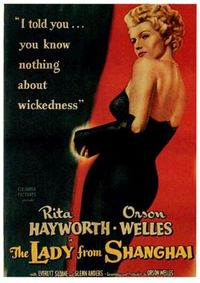
I really despise Desdemona and Ophelia and Juliet. They are pathetic. All of them could have taken their fates in their own hands and said 'No thank you, I think I can do better' and rode off into the sunset. Instead they die tragic deaths because, ultimately, they do what they are told. Desdemona just lies there and lets her husband strangle her (as you do), Ophelia goes insane and kills herself because Hamlet doesn't love her anymore (teen angst if ever there was some), and Juliet kills herself because she didn't have sense to run off with Romeo when he got banished. The only reason I wanted any one of those parts when I was acting at University was because those parts (thoses types of role) always go to the skinny pretty girls who don't necessarily act very well, but who look the part. So basically, being cast as 'Juliet' is like some male director going 'yeah, you're pretty', and I know a lot of girls needed that self-esteem boost (I know I did at the time).
Now, I like this article, because what it's saying is that this sort of stereotype works the other way. The only interesting strong women in theatre (or at least the main contenders for the title) are murderers. In other words, only by acting 'anti-feminine' can a female role be considered equal to a man's. I know this is an age-old feminist argument, but I think it proves the point here. You get anti-heros all the time for male actors, characters who aren't kings or soldiers but everyday Joes who go through something tragic. No one cares about Willy Loman's wife (for example), who also goes through tragedy. Sure, if she'd have killed her husband then she'd be one of the all time greatest female roles in history, but she doesn't.
I'm trying to come up with my 'point', and it's difficult because obviously being a woman, and acting on occasion, I would love to create a role (or even better several roles) for women where they weren't passive but at the same time they didn't have to pull the trigger, stab someone through the heart or poision anyone to be considered meaty roles. How to do that though seems trickier than it should be.
Sympathy for the She-devils
Thought this article was really interesting about women characters in theatre. I've cut and paste the article as often links don't work once the article has been archived (I've found).
"Sympathy for the she-devils
From Lady Macbeth to Thérèse Raquin, the stage has always adored a brutal murderess. So what do these parts tell us about women? Not much, writes Lyn Gardner - but they speak volumes about the male writers who created them.
Wednesday November 8, 2006The Guardian
Everyone loves a bad girl, particularly in the theatre. Our stages are littered with the corpses of deadly women, from Medea to Lady Macbeth, from Vittoria in the White Devil, to Oscar Wilde's sexy Salome. These are women who pass through men's lives like a curse, leaving only death and destruction behind. Even in pantomime, Snow White's wicked stepmother looms large, another example of the age-old appeal of female villains.
A couple of thousand years before the movies got in on the act with their smoky femmes fatales, and deadly women such as Catherine Trammell in Basic Instinct, theatre regularly offered up images of women who were allowed to take centre stage because their murderous actions meant they were no longer seen to be behaving like women, but more like men.
In drama, these unnatural creatures had to be caught, tamed and punished as a lesson to other women. That is, if they did not have the decency to go mad and kill themselves, like Lady Macbeth and Thérèse Raquin, the latter now showing in a new stage version at the National. Raquin, in Emile Zola's famous 19th-century novel, succumbs to the madness of love and murder, and is then driven mad by guilt.
When Euripides flouted theatrical tradition by allowing Medea, the child-killer, to escape unpunished, the playwright Aristophanes rebuked him in verse. The idea that women who kill do not behave like ideal women, but more like men is summed up not only by Lady Macbeth's line "unsex me here", but also by Dame Edith Evans' observation on being offered the role of the Scottish murderess: "It's absolutely out of the question. I could never impersonate a woman who had such a peculiar notion of hospitality." Lady Macbeth's sins, it seems, were not confined to regicide but extended to womanly failures of housekeeping and etiquette.
Goneril and Regan in King Lear, too, often seem shocking not for how they wage war and encourage torture, but for the fact they have so little patience - very much a female virtue - with quarrelsome old people. Similarly, the wicked queen in Snow White must be punished not just for her ingenious, if frankly unwholesome, way with apples, but for failing to play her assigned role as a substitute mother to the vapid Snow White, a young woman whose tedious obsession with housework sets her up as an icon of perfect femininity.
In theatre, it sometimes seems that the only way women can escape their gender roles and the terrible burden of femininity is by plunging a knife into a male breast or taking aim with a gun and making damn sure they don't miss. There's the avenging Clytemnestra, who takes a lover and kills her husband, in the Oresteia; Alice Arden, in the 1599 play Arden of Faversham, demonstrates a determination to dispatch her husband that outstrips the ludicrous attempts of her bungling male accomplices; and the lithe Beatrice-Joanna, in the 1622 revenge tragedy The Changeling, commits adultery and murder - and pays the price not just for killing but also for having found sexual satisfaction.
Like the later Victorian stories of villainous women and today's made-for-TV movie plots, many of these early plays were based on true-life crime stories. Arden of Faversham came from a circulating story about a brutal murder that struck horror into the Elizabethan breast, with its suggestion that death can lurk at home in the shape of an apparently dutiful wife.
The Changeling, too, had its roots not just in the exotic tales of faraway crimes, but also in the high-society scandal of Lady Frances Howard. Married in 1606, at the age 13, to the Earl of Essex, she became the mistress of the Earl of Somerset, with whom she eventually stood trial for murder.
Like their late 20th and 21st century movie counterparts, these women exert an allure that has little to do with the reasons why the majority of women kill - self-defence, domestic violence, mental abuse - and a great deal to do with an erotic fascination with female violence; these killers are depicted as lithe and lethal babes.
Not for nothing does the stage musical Chicago regularly advertise itself with teasing images of pouting, sexy young women dubbed as "natural blonde killers". One of these early advertisements even bore a passing resemblance to the infamous portrait of Myra Hindley, herself the subject of numerous TV dramas and stage plays - and a slew of one-woman shows without which no Edinburgh Fringe would be complete.
What these stage depictions of women as murderers conveniently forget is that, in real life, women are more likely to be the victims, not the perpetrators, of violence. The gory Theatre du Grand Guignol, founded in Paris in 1897, was undoubtedly lurid and sensational with its decapitations, blood and eyeballs rolling all over the stage. But it may have actually portrayed a more truthful reflection of the female experience of violence than our stages sometimes offer even today. One Guignol actress, Maxa, kept a tally of her demises there: she was murdered 10,000 times in more than 60 different ways. Whether or not female violence is on the rise, the reality is that women killers are still massively outnumbered by men.
Unsurprisingly, you'll find more actors queuing up to play Medea and Lady Macbeth than their more balanced sisters; both roles represent two of the peaks in any classical actress's career. Who wouldn't prefer playing a Salome or a Goneril over all those invisible good girls - a veritable army of Ophelias and Desdemonas, who, in plays written largely by men, stalk the stage like ghosts and dissolve before the play is done? These disappearances often pass virtually without comment, because these women were barely there in the first place - walk-on players in the dramas of men's lives.
The female killer, the passive woman turned predator, is a far more dazzling dramatic spectacle. Unlike the good girls who are so easily shoved into the wings and out of theatre history, the bad girls have been allowed to take their place centre stage and revel in it. In the theatre, if you're female, crime really does pay ..."
"Sympathy for the she-devils
From Lady Macbeth to Thérèse Raquin, the stage has always adored a brutal murderess. So what do these parts tell us about women? Not much, writes Lyn Gardner - but they speak volumes about the male writers who created them.
Wednesday November 8, 2006The Guardian
Everyone loves a bad girl, particularly in the theatre. Our stages are littered with the corpses of deadly women, from Medea to Lady Macbeth, from Vittoria in the White Devil, to Oscar Wilde's sexy Salome. These are women who pass through men's lives like a curse, leaving only death and destruction behind. Even in pantomime, Snow White's wicked stepmother looms large, another example of the age-old appeal of female villains.
A couple of thousand years before the movies got in on the act with their smoky femmes fatales, and deadly women such as Catherine Trammell in Basic Instinct, theatre regularly offered up images of women who were allowed to take centre stage because their murderous actions meant they were no longer seen to be behaving like women, but more like men.
In drama, these unnatural creatures had to be caught, tamed and punished as a lesson to other women. That is, if they did not have the decency to go mad and kill themselves, like Lady Macbeth and Thérèse Raquin, the latter now showing in a new stage version at the National. Raquin, in Emile Zola's famous 19th-century novel, succumbs to the madness of love and murder, and is then driven mad by guilt.
When Euripides flouted theatrical tradition by allowing Medea, the child-killer, to escape unpunished, the playwright Aristophanes rebuked him in verse. The idea that women who kill do not behave like ideal women, but more like men is summed up not only by Lady Macbeth's line "unsex me here", but also by Dame Edith Evans' observation on being offered the role of the Scottish murderess: "It's absolutely out of the question. I could never impersonate a woman who had such a peculiar notion of hospitality." Lady Macbeth's sins, it seems, were not confined to regicide but extended to womanly failures of housekeeping and etiquette.
Goneril and Regan in King Lear, too, often seem shocking not for how they wage war and encourage torture, but for the fact they have so little patience - very much a female virtue - with quarrelsome old people. Similarly, the wicked queen in Snow White must be punished not just for her ingenious, if frankly unwholesome, way with apples, but for failing to play her assigned role as a substitute mother to the vapid Snow White, a young woman whose tedious obsession with housework sets her up as an icon of perfect femininity.
In theatre, it sometimes seems that the only way women can escape their gender roles and the terrible burden of femininity is by plunging a knife into a male breast or taking aim with a gun and making damn sure they don't miss. There's the avenging Clytemnestra, who takes a lover and kills her husband, in the Oresteia; Alice Arden, in the 1599 play Arden of Faversham, demonstrates a determination to dispatch her husband that outstrips the ludicrous attempts of her bungling male accomplices; and the lithe Beatrice-Joanna, in the 1622 revenge tragedy The Changeling, commits adultery and murder - and pays the price not just for killing but also for having found sexual satisfaction.
Like the later Victorian stories of villainous women and today's made-for-TV movie plots, many of these early plays were based on true-life crime stories. Arden of Faversham came from a circulating story about a brutal murder that struck horror into the Elizabethan breast, with its suggestion that death can lurk at home in the shape of an apparently dutiful wife.
The Changeling, too, had its roots not just in the exotic tales of faraway crimes, but also in the high-society scandal of Lady Frances Howard. Married in 1606, at the age 13, to the Earl of Essex, she became the mistress of the Earl of Somerset, with whom she eventually stood trial for murder.
Like their late 20th and 21st century movie counterparts, these women exert an allure that has little to do with the reasons why the majority of women kill - self-defence, domestic violence, mental abuse - and a great deal to do with an erotic fascination with female violence; these killers are depicted as lithe and lethal babes.
Not for nothing does the stage musical Chicago regularly advertise itself with teasing images of pouting, sexy young women dubbed as "natural blonde killers". One of these early advertisements even bore a passing resemblance to the infamous portrait of Myra Hindley, herself the subject of numerous TV dramas and stage plays - and a slew of one-woman shows without which no Edinburgh Fringe would be complete.
What these stage depictions of women as murderers conveniently forget is that, in real life, women are more likely to be the victims, not the perpetrators, of violence. The gory Theatre du Grand Guignol, founded in Paris in 1897, was undoubtedly lurid and sensational with its decapitations, blood and eyeballs rolling all over the stage. But it may have actually portrayed a more truthful reflection of the female experience of violence than our stages sometimes offer even today. One Guignol actress, Maxa, kept a tally of her demises there: she was murdered 10,000 times in more than 60 different ways. Whether or not female violence is on the rise, the reality is that women killers are still massively outnumbered by men.
Unsurprisingly, you'll find more actors queuing up to play Medea and Lady Macbeth than their more balanced sisters; both roles represent two of the peaks in any classical actress's career. Who wouldn't prefer playing a Salome or a Goneril over all those invisible good girls - a veritable army of Ophelias and Desdemonas, who, in plays written largely by men, stalk the stage like ghosts and dissolve before the play is done? These disappearances often pass virtually without comment, because these women were barely there in the first place - walk-on players in the dramas of men's lives.
The female killer, the passive woman turned predator, is a far more dazzling dramatic spectacle. Unlike the good girls who are so easily shoved into the wings and out of theatre history, the bad girls have been allowed to take their place centre stage and revel in it. In the theatre, if you're female, crime really does pay ..."
Tuesday, October 31, 2006
Quick Link
http://blogs.guardian.co.uk/theatre/2006/10/from_page_to_stage.html
Interesting article about play development schemes and the state of new writing for the theatre.
Interesting article about play development schemes and the state of new writing for the theatre.
Subscribe to:
Posts (Atom)


 Posts
Posts

